Sunday, July 12, 2009

Definition of Equality

Several years ago, much of the news centered around affirmative action.  Although I am generally against the concept of affirmative action, I admit that I don't know how long it will take to undo all the years of segregation.

It is very easy to point out inequality.  You simply point it out.  You take a definite example and say that inequality exists.  One piece that always seemed to bother me was when someone would point out racism and mention that affirmative action was still needed...but the end point always kept moving.  People would say that there are no black baseball players.  Then no black pitchers.  Then no black coaches.  Then no black owners.  Next it might be there is a discrepancy in left handed pitcher's ERA's who pitch on the third Tuesday in a month with a blue moon.  

But how do you define equality and make laws and policies around it?  I always wanted to ask people, "Under what measurable conditions would it take for you to agree that affirmative action is not needed anymore? "

I thought about that for quite a while, and I created my own list.  My list is simple, looking at positive behaviors, and generally is about everyone having the same opportunities...but not necessarily the same outcome.  Based on the Keep It Simple method, here is my list:

  1. The number of high school, college, and graduate school graduates must be equivalent among all races.  Simple.  I did not include parent's income, the number of students receiving aid, grants, or scholarships.
  2. The number of people owning a home is equivalent among races.
  3. The number of people owning small businesses (5-250 employees) is equivalent among races.  I really don't care about the leaders fortune 500 companies as this is only a small percentage of the workforce.
  4. The number of teenage pregnancies is equivalent among races.

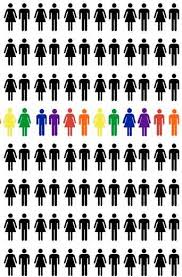
After compiling my list, fine-tuning it, and just thinking about what it means; I realized that this is how I define equality.  This list isn't only about race--it could be used to define equality among between any two groups.

I know my list is very simple.  My list probably doesn't represent everyone's opinion, but it is a start.  I wish I would hear more opinions of the definition of equality!

Bookmark and Share

Friday, July 10, 2009

Professional Politicians

Why does it seem that all federal politicians only had the career of a politician? They start their careers in local government, then state government, and ending in federal government.

How many politicians comprehend all the rules they force on people; or even read the legislation? How many of them are business owners? How many of them have to purchase their own health insurance? How many of them send their children to public schools? How many of them are considered rich and vote for themselves to pay more taxes?

Does it seem that if a successful businessperson runs for a political seat, that everyone feels like that person is trying to buy the election? Why do people feel like the only good candidates are political lifers?

I wish all political leaders be required to work in their own district at least six months of each year. These leaders might spend more time at home running a small business, volunteering, or just getting to know their constituents better. The time spent working as a politician could then focus just on the important matters with more empathy for the people back home.

A democracy cannot exist as a permanent form of government. It can only exist until the voters discover that they can vote themselves largesse from the public treasury. From that moment on, the majority always votes for the candidates promising the most benefits from the public treasury... Attributed to Tytler.

Bookmark and Share

Tuesday, June 9, 2009

Judicial Systems Around the World

Does anyone find it ironic that two news articles appeared on June 8th, 2009 that dealt with prisons, prison life, and judicial sentencing?  This demonstrates a huge contrast between different country's sentencing styles and the expectations of prison life.

One was about the possibility of closing San Quentin, but the inmates (including murderers) don't want to leave as they want to maintain their lifestyle of the Shakespearean drama program, football, baseball, basketball, soccer and tennis teams, and the Prison University Project.  

The second article was about North Korea sentencing two journalists to twelve years of hard labor for encroaching on North Korean soil for reporting on human trafficking by Kim Jong Il's regime.

Maybe these two articles illustrate some of the differences between rehabilitation and punishment/deterrence. 

Bookmark and Share

Monday, June 1, 2009

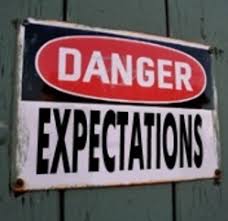
Expectation of Students

I can't believe many school districts are trying to do away with homework, grades, and deadlines. Some are even trying to remove any negative consequences for cheating. I believe there is a huge disconnect between some of these decision makers and the teachers that must implement these rules.

  • Recently, cbs11tv.com reported Plano Independent School District stated that homework will no longer be required for middle school students and the grades for homework assignments that are assigned will not apply to students' report card grades. Furthermore, the district is considering a policy to allow students to turn in any assignment at any time.
  • The Pittsburgh Public Schools had a grading system that sets 50 percent as the minimum score a student can receive on any test and assignment. This policy was replaced after it was found out that many students were happy to get a 50%. Of course, their new policy still has issues.
  • Several Knox County middle schools are trying a grading approach that allows students to make up zeros and turn in assignments no matter how late.

Can you imagine the life of the school administration...We just made it easier for students to erase those pesky zeros. We will be viewed better by the state and federal governments since we will have more passing $tudent$.

Can you imagine the life of a student...Freedom! No school work since it will not affect their grade. They can go out each night since they have nothing due the next day! They might even wonder why there is a controversy about the university president and plagiarism. I doubt they lose any sleep trying to complete all the assignments during the last two weeks of term.

Can you imagine the life of a parent...How can we justify that our sons and daughters must do their work outside of school if the school itself doesn't even consider it important?

Can you imagine the life of a teacher...How much extra work is needed to grade each assignment as it comes in? What was the grading scale for that assignment due two months ago? How should was describe their student's performance when calling parents for lack of homework? How should we identify students at risk of failing if there is no continuous way to determine the student's abilities? How are we to motivate our students to study and do their homework?

Can you image the life of a future employer...Why do we keep hiring people that do not know what a deadline is? Why do our employees expect to get paid for zero work? I wish we could import some immigrants who were taught a good work ethic.

Can you imagine how I think about this? Well, once there was this 'great' idea that walls separating classrooms was a bad idea and so this school built a high school without walls. There were no walls between algebra and chemistry. There were no walls between the class that took the English class that took the test yesterday and the one taking it today. This open classroom idea lasted a very short time before the classes were partitioned off. The idea of open classrooms was not a good idea. I don't see how removing homework, grades, deadlines, and discipline is a good idea either.

In general, the most a student will achieve is the least expected of them.

Bookmark and Share

Thursday, May 28, 2009

Importance of Teachers

An AP article, 'New CEO: Gates Foundation learns from experiments' discusses how much influence a teacher makes to students. A little blurb:

Raikes said the district found that putting a great teacher in a low-income school helped students advance a grade and a half in one year. An ineffective teacher in a high-income school held student achievement back to about half a grade of progress in a year.

Now our society needs to have the school boards, superintendents, and principals recognize the importance of the teachers. This means the people on the top of our educational system need to give more resources to the teachers instead of adding more meaningless chores to the overworked teachers.

I really wish that all superintendents, principals, and political figures were required to teach at least one hour each day.  Then maybe they would realize some of the tasks and limitations that teachers are forced to endure.

Bookmark and Share

Tuesday, May 26, 2009

What's Wrong with Our Educational System

My wife is a teacher at an urban high school. Some of the policies in place are:
  • A student's grade cannot be affected by behavior issues. Cheating, however, is considered a behavior and thus cannot be reflected on the student's grade.
  • A student being present in the classroom is irrelevant. There are very few penalties for being tardy with some students being tardy 14-15 times for one class in one semester. Also, a student can be absent 80% of the time and still get credit.
  • There is no due date for any homework. If the student wants to turn in all their homework on the last day of school, that is fine by the school's administration. (Boy, I wish my boss was OK with that).

With these MAJOR issues, it is the teacher's that are blamed. They are told they need better classroom management. They are told they need to be more positive. They are told to just say 'Yes' to whatever the student wants. They are told to influence the student's behavior since the administration will not use its backbone with a parent or student.

Maybe the school administration should fix the MAJOR issues before tweaking how the teacher teaches. How can we expect students to learn if we say it is OK to cheat, skip work class, no deadlines, etc.? What are we teaching our students? Do we only have expectations of teachers and no one else?

Schools should do what is best for the students...and that is not always saying 'Yes'

Bookmark and Share

SCOTUS Nominee Sotomayor

This really doesn't have anything to do with Sotomayor since I don't know how she will vote, but...

Why does the Supreme Court members have to be an elite political party? It seems that you could throw any issue at the SCOTUS and predict 99% of the time how each judge will vote even before any arguments are heard. The way it is now, it just appears to be a smaller version of Congress and everything is political. 

Shouldn't the judges hear the arguments and make their decisions on the arguments and the Constitution? Not whether they are personally for or against big government, taxes, guns, abortion, immigration, etc.

Bookmark and Share

Tuesday, May 19, 2009

Reason to become (or not become) a teacher

People become teachers because someone sparked an interest that grew into a flame that they want to share with others.

Once becoming a teacher they are ignored, treated with disrespect, and made into scapegoats from politicians, school administrators, parents and students--and the only spark left is of hope.

Literature Review: Research shows that close to thirty percent of new teachers leave teaching within three years and nearly fifty percent quit before five years; most shocking is that fifteen percent leave the profession in the first year (Ingersoll, 2002; Ingersoll & Smith, 2003). Linda Darling-Hammond (2003), citing a Texas study showing that teacher turnover costs the state around $329 million a year, reiterated, “early attrition bears enormous costs” (p. 8). source: Why New Teachers Come and Go-What We Can Do to Help Them Stay

Bookmark and Share

Thursday, May 14, 2009

Rights and Restrictions

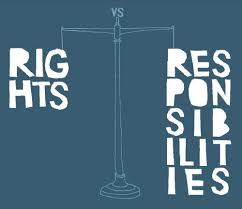
The U.S. Constitution lists several rights that Americans have.  These might include freedom of religion, speech, assembly, and privacy.  Privacy is not directly mentioned, but it is generally interpreted that way from several of the items in the Bill of Rights.  These written rights are defended by all Americans...

...until something happens and then some restrictions are added.  You can't yell 'Fire' in a crowded room.  You really don't have the right of privacy if you are a celebrity.  You can't own a firearm until you are an adult.  Even the Constitution itself mentions libel and slander while also mentioning the freedom of speech and press.  The end result is that we have some restrictions and responsibilities on each of our rights.

So I am wondering what are the rights, restrictions, and responsibilities of some of our 'rights' that are not specifically written into the Constitution.  In particular, what are the boundaries to our 'right' to a quality education, our 'right' to quality health care, and our 'right' to an abortion?

Bookmark and Share

Wednesday, May 13, 2009

Conservative vs. Liberal

The more I think about it, the root difference between conservatives and liberals is on how they view the U.S. Constitution.  

Conservatives look closely at the founding father's reasoning for their inclusions and exclusions.  Then they look at today's society and the original intent of the Constitution trumps today's desires.

Liberals, on the other hand, believe that the Constitution is alive and always changing.  Since today's intent trumps the original intent, the liberal's view is that the Constitution is much more fluid and flexible.

While most Americans are reasonable and will agree that both components are important, the political extremist will only view whatever fits into their agenda.

Do you agree with this simplistic reasoning?

Update:  This was just discussed on Glenn Beck about Cass Sustein's comments.

Bookmark and Share